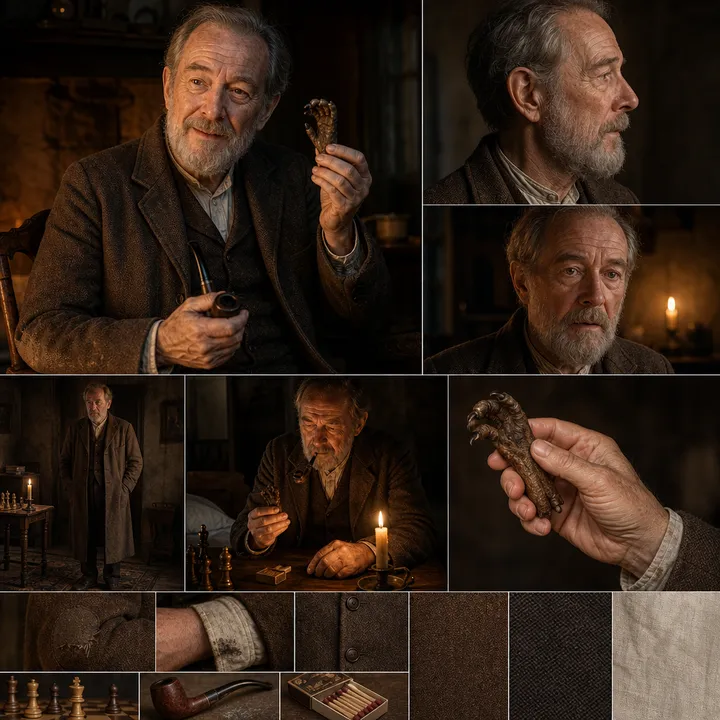
Elderly; proposed casting range 60–75, not a textual age.
Height, build
Unspecified; retain credible elderly mobility.
Face
Affectionate humor, then stunned grief and fearful concentration.
Hair
Thin grey beard is explicit; scalp hair unspecified.
Eyes
Color unspecified; lock after casting.
Wardrobe
Proposed brown wool domestic separates, distinct garden coat, plain period nightwear.
Posture
Hospitable forward movement becomes trembling hesitation and a floor-level search.
Props
Monkey's paw, Chess pieces, Pipe, Matches
Motifs
Risked chess king, Raised right hand, Searching hands
Palette
Worn brown, charcoal and muted cream.
Light
Initially warmed by the fire; later fragmented by candlelight and darkness.
In the story
Makes the wishes and performs the final undisclosed action.
Keep the same in every shot
Thin grey beard
Right-hand wish staging
Garden coat for the news scene
No luxury or miser caricature.
Do not reveal the third wish's words.
From the book
Old man.
Thin grey beard.
Wears his usual garden coat during the representative's visit.
Not in the book (decide and keep)
Exact age, complexion, eyes, scalp hair and build are unknown.
Prompt
Elderly father with a thin grey beard, ordinary worn brown wool domestic clothing as an interpretive choice, affectionate eyes and a restrained expressive face, realistic age and hands; use the approved identity reference. Contained naturalistic period horror rooted in domestic tragedy. Modest, materially convincing rooms first feel secure and affectionate, then become painfully empty and difficult to navigate. Use tactile wool, worn wood, copper, glass, paper and iron; restrained grain and realistic skin rather than gothic spectacle. The proposed late-Victorian/early-Edwardian design envelope is cinematic interpretation, not a manuscript-stated date. Preserve the supernatural through testimony, subjective perception, offscreen sound and interrupted action. Hearth, Winter Daylight, Extinguished Flame: Hearth amber #B9763F, Worn walnut #574236, Copper #9D6142, Linen cream #D2C8B4, Winter daylight grey #A8ADB0, Night blue-grey #47515B, Charcoal #242426, Paw umber #554638. Opening evening: a bright real-looking fire motivates amber light and warm skin; darkness outside remains visibly cold and wet.; The next morning has clear wintry sunlight and an honestly wholesome domestic appearance, not an uninterrupted horror grade. Proposed format: 1.85:1, natural perspective, restrained depth of field and tactile image texture.; Opening family scenes favor shared eye-level frames, allowing humor and affectionate glances to coexist.
The Monkey’s Paw · Character sheet
Mrs. White
Co-protagonist and mother.
Age
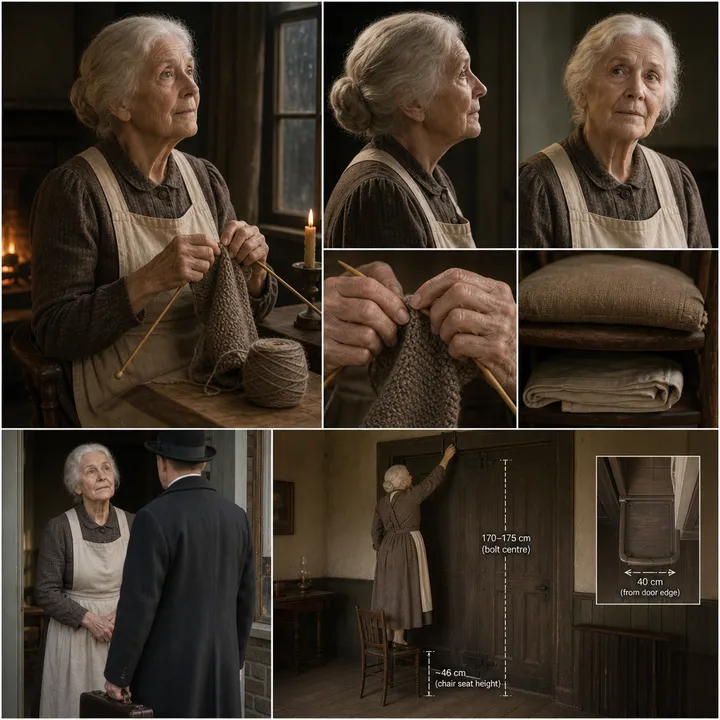
Elderly; proposed casting range 60–75, not a textual age.
Height, build
Unspecified; upper bolt must exceed her unaided reach.
Face
Warm composure, dawning loss, exhausted grief and urgent hope.
Hair
White; proposed simple pinned arrangement by day.
Eyes
Color unspecified; heightened brightness is emotional, not luminous.
Wardrobe
Proposed practical day dress, removable apron, restrained mourning variation and plain nightwear.
Posture
Placid seated activity becomes rigid listening and purposeful physical effort.
Props
Knitting, Antimacassar, Apron, Chair, Door bolts
Motifs
Knitting hands, Window vigil, Unreachable bolt
Palette
Muted grey-brown dress, cream apron and pale nightwear.
Light
Firelit domestic warmth becomes candlelit expectation and cold threshold light.
In the story
Demands the second wish and works to admit the person she believes is Herbert.
Keep the same in every shot
White hair
Removable apron
Consistent reach against door hardware
No supernatural facial change.
She opens the door after the final wish.
From the book
White-haired old lady.
Knits by the fire.
Wears an apron before the representative arrives.
Cannot reach the upper front-door bolt.
Not in the book (decide and keep)
Exact age, height, build, eye color and facial structure are unknown.
Prompt
White-haired elderly mother in a practical muted wool dress and removable apron, simple pinned hair as an interpretive choice, observant warmth, realistic aged hands; preserve the same face in grief and nightwear. Contained naturalistic period horror rooted in domestic tragedy. Modest, materially convincing rooms first feel secure and affectionate, then become painfully empty and difficult to navigate. Use tactile wool, worn wood, copper, glass, paper and iron; restrained grain and realistic skin rather than gothic spectacle. The proposed late-Victorian/early-Edwardian design envelope is cinematic interpretation, not a manuscript-stated date. Preserve the supernatural through testimony, subjective perception, offscreen sound and interrupted action. Hearth, Winter Daylight, Extinguished Flame: Hearth amber #B9763F, Worn walnut #574236, Copper #9D6142, Linen cream #D2C8B4, Winter daylight grey #A8ADB0, Night blue-grey #47515B, Charcoal #242426, Paw umber #554638. Opening evening: a bright real-looking fire motivates amber light and warm skin; darkness outside remains visibly cold and wet.; The next morning has clear wintry sunlight and an honestly wholesome domestic appearance, not an uninterrupted horror grade. Proposed format: 1.85:1, natural perspective, restrained depth of field and tactile image texture.; Opening family scenes favor shared eye-level frames, allowing humor and affectionate glances to coexist.
The Monkey’s Paw · Character sheet
Herbert White
Son and main character.
Age
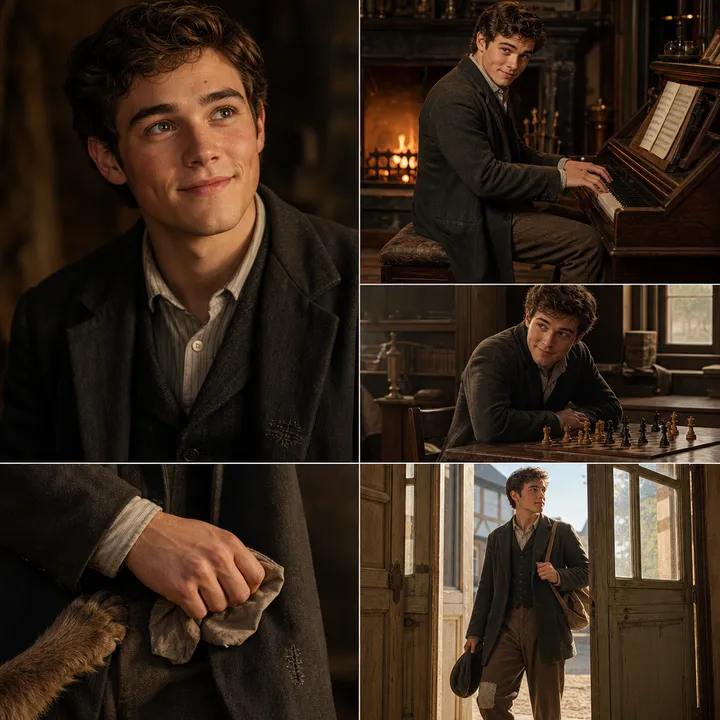
Youthful working son; proposed young-adult casting, approximately 18–25.
Height, build
Unspecified; comfortable with quick domestic movement.
Face
Playful alertness and mock solemnity, with brief private unease.
Hair
Unspecified; lock after casting.
Eyes
Unspecified; lock after casting.
Wardrobe
Proposed modest civilian separates; no invented industrial uniform.
Posture
Relaxed, quick and teasing; darts around the table and plays theatrical chords.
Props
Chessboard, Piano, Monkey's paw, Water glass, Pipe
Motifs
Piano chords, Chess victory, Vacant place after death
Palette
Muted brown and cream within the family's warm domestic palette.
Light
Belongs to warm evening light and clear morning sun; later represented by absence.
In the story
Suggests the amount of the first wish and becomes the focus of bereavement.
Keep the same in every shot
Single living identity
Everyday coat
Easy expressive movement
Do not depict his accident.
No corpse or returned-body design.
Do not make the final knocker visibly Herbert.
From the book
Described through youthful behavior.
Wears a coat on which he wipes his hand after touching the paw.
Not in the book (decide and keep)
Exact age, hair, eyes, complexion and build are unknown.
No returned appearance is described.
Prompt
Young adult son with a lively teasing expression, modest period shirt, waistcoat, trousers and everyday coat as interpretive wardrobe, relaxed familial posture; use one approved face and do not generate a posthumous variant. Contained naturalistic period horror rooted in domestic tragedy. Modest, materially convincing rooms first feel secure and affectionate, then become painfully empty and difficult to navigate. Use tactile wool, worn wood, copper, glass, paper and iron; restrained grain and realistic skin rather than gothic spectacle. The proposed late-Victorian/early-Edwardian design envelope is cinematic interpretation, not a manuscript-stated date. Preserve the supernatural through testimony, subjective perception, offscreen sound and interrupted action. Hearth, Winter Daylight, Extinguished Flame: Hearth amber #B9763F, Worn walnut #574236, Copper #9D6142, Linen cream #D2C8B4, Winter daylight grey #A8ADB0, Night blue-grey #47515B, Charcoal #242426, Paw umber #554638. Opening evening: a bright real-looking fire motivates amber light and warm skin; darkness outside remains visibly cold and wet.; The next morning has clear wintry sunlight and an honestly wholesome domestic appearance, not an uninterrupted horror grade. Proposed format: 1.85:1, natural perspective, restrained depth of field and tactile image texture.; Opening family scenes favor shared eye-level frames, allowing humor and affectionate glances to coexist.
The Monkey’s Paw · Character sheet
Sergeant-Major Morris
Supporting visitor and warning figure.
Age
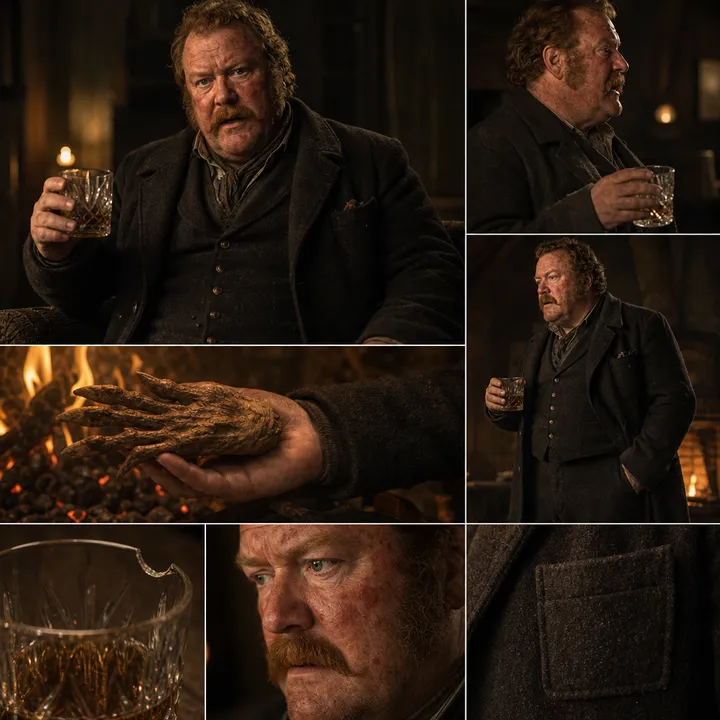
Middle-aged; exact age unspecified.
Height, build
Tall, burly and broad-shouldered.
Face
Rubicund and blotchy; briefly whitens while recalling his wishes.
Hair
Unspecified; approve separately.
Eyes
Beady, small and penetrating; color unspecified.
Wardrobe
Proposed dark civilian wool with practical pockets; no uniform claim.
Posture
Broad shoulders squared in a chair; hesitant handling and abrupt decisive throw.
Props
Monkey's paw, Whiskey tumbler
Motifs
Glass against teeth, Paw over the fire
Palette
Dark wool and ruddy skin against copper firelight.
Light
Firelight reveals ruddy warmth without making his later pallor supernatural.
In the story
Introduces the paw and its reported rules while trying to discourage use.
Keep the same in every shot
Tall burly silhouette
Ruddy blotchy face
Small eyes
Broad shoulders
Preserve build and ruddy face.
No invented medals or military unit.
He relinquishes possession after White retrieves the paw.
From the book
Tall and burly.
Beady eyes and rubicund visage.
Broad shoulders, blotchy face and strong teeth.
Not in the book (decide and keep)
Exact age, hair, facial hair and clothing are unspecified.
Regiment and insignia are not supplied.
Prompt
Tall burly middle-aged veteran, broad shoulders, small penetrating eyes, ruddy blotchy face, dark civilian wool clothing as an interpretive choice, solid seated bearing and grave restraint. Contained naturalistic period horror rooted in domestic tragedy. Modest, materially convincing rooms first feel secure and affectionate, then become painfully empty and difficult to navigate. Use tactile wool, worn wood, copper, glass, paper and iron; restrained grain and realistic skin rather than gothic spectacle. The proposed late-Victorian/early-Edwardian design envelope is cinematic interpretation, not a manuscript-stated date. Preserve the supernatural through testimony, subjective perception, offscreen sound and interrupted action. Hearth, Winter Daylight, Extinguished Flame: Hearth amber #B9763F, Worn walnut #574236, Copper #9D6142, Linen cream #D2C8B4, Winter daylight grey #A8ADB0, Night blue-grey #47515B, Charcoal #242426, Paw umber #554638. Opening evening: a bright real-looking fire motivates amber light and warm skin; darkness outside remains visibly cold and wet.; The next morning has clear wintry sunlight and an honestly wholesome domestic appearance, not an uninterrupted horror grade. Proposed format: 1.85:1, natural perspective, restrained depth of field and tactile image texture.; Opening family scenes favor shared eye-level frames, allowing humor and affectionate glances to coexist.
The Monkey’s Paw · Character sheet
The Maw and Meggins representative
Supporting company messenger.
Age
Adult; no numerical age established.
Height, build
Unspecified.
Face
Uneasy, preoccupied and restrained.
Hair
Unspecified; approve with casting.
Eyes
Unspecified; gaze frequently averted.
Wardrobe
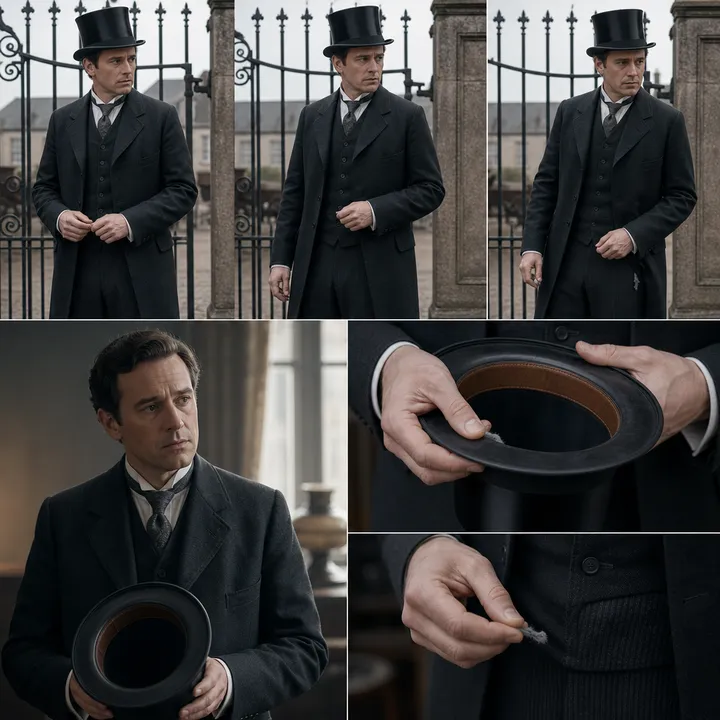
Textual silk hat and well-dressed appearance; proposed sober formal coat and waistcoat.
Posture
Repeated hesitation, small nervous gestures and a turn toward the window.
Props
Silk hat
Motifs
Glossy silk hat, Gate hesitation, Averted face
Palette
Charcoal and restrained black silk highlights.
Light
Ordinary daylight; no villainous underlighting.
In the story
Reports the accident and offers exactly two hundred pounds as compensation.
Keep the same in every shot
Glossy silk hat
Neat dark clothing
Hesitant bearing
Keep glossy new silk hat.
No invented company badge or document.
No implication that he knows about the paw.
From the book
Well dressed.
Wears a silk hat of glossy newness.
Picks cotton from his trousers.
Not in the book (decide and keep)
Age, facial features, build, complexion and exact company position are unknown.
Hat handling inside is not specified.
Prompt
Well-dressed adult company representative in sober dark period formal clothing with a glossy new silk hat, uneasy posture and averted gaze, realistic restraint; face and age to follow the approved casting reference. Contained naturalistic period horror rooted in domestic tragedy. Modest, materially convincing rooms first feel secure and affectionate, then become painfully empty and difficult to navigate. Use tactile wool, worn wood, copper, glass, paper and iron; restrained grain and realistic skin rather than gothic spectacle. The proposed late-Victorian/early-Edwardian design envelope is cinematic interpretation, not a manuscript-stated date. Preserve the supernatural through testimony, subjective perception, offscreen sound and interrupted action. Hearth, Winter Daylight, Extinguished Flame: Hearth amber #B9763F, Worn walnut #574236, Copper #9D6142, Linen cream #D2C8B4, Winter daylight grey #A8ADB0, Night blue-grey #47515B, Charcoal #242426, Paw umber #554638. Opening evening: a bright real-looking fire motivates amber light and warm skin; darkness outside remains visibly cold and wet.; The next morning has clear wintry sunlight and an honestly wholesome domestic appearance, not an uninterrupted horror grade. Proposed format: 1.85:1, natural perspective, restrained depth of field and tactile image texture.; Opening family scenes favor shared eye-level frames, allowing humor and affectionate glances to coexist.